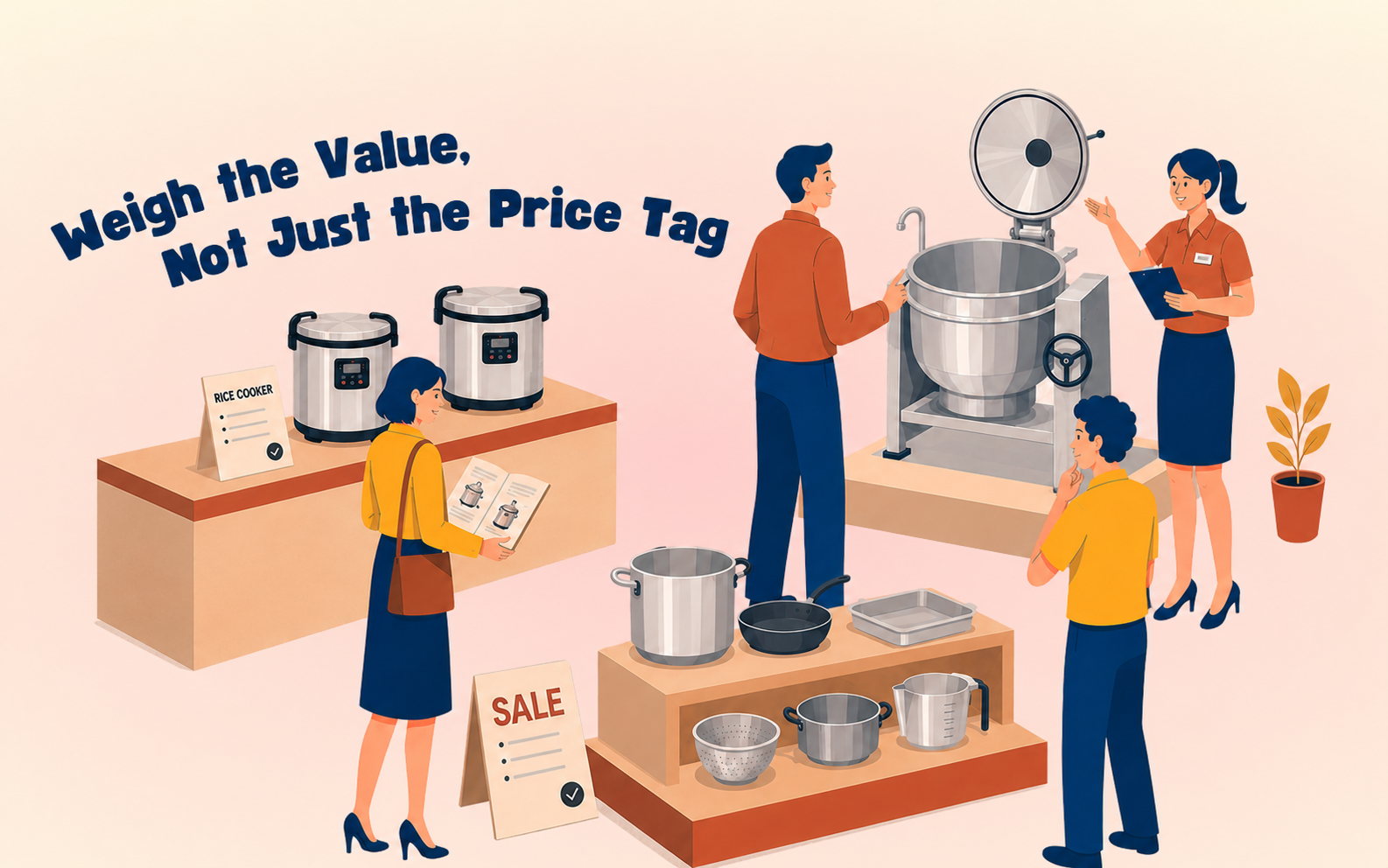
Have you ever walked into a store with a huge “SALE” sign, even though you knew you didn’t actually need anything from the store?
Or have you simply left a store in disappointment because the price tags on clearance items still seemed unreasonable to you? You might have thought, I’d rather go somewhere else where I can get this for much cheaper.
Maybe you’ve also experienced the satisfaction of finding a cheap product and thinking, What a steal! And because it was inexpensive, replacing it doesn’t seem like such a big deal either.
As inflation has raised the cost of living, it's inevitable that people have become more mindful of their finances and budgets when making purchases.
Consumers often like to think that they have outsmarted the system by finding the cheapest deal. But have we really?
There is actually a scientific explanation behind the satisfaction of purchasing low-cost or discounted goods. According to the BBC, dopamine, a neurotransmitter in the brain, starts to produce in our body when we shop for clearance items or cheap goods in our favorite stores or shopping websites. The rewarding feeling of buying a cheap or discounted item can be addictive and makes us seek out that high again.
This is where businesses can win the psychological game. As Somerville (2015) wrote in The Guardian, “It’s the ultimate mind game: we’d rather pay $10 for something and have to replace it every year, than pay $50 and have it last for five.”
But being economical doesn’t always mean sacrificing quality. Instead of focusing on affordability alone, we can focus on making purchasing decisions that are rational and worthwhile in the long run.
Sometimes, the smarter choice is to invest in quality products that will last longer. At other times, buying secondhand can be a more affordable and sustainable alternative.
The idea becomes even more important when we consider products that are expensive or difficult to replace, such as technological devices and household appliances. Before making a purchase, instead of simply asking “How much does this cost?”, we can ask ourselves:
- Is the price justified by its quality?
- Even with a budget in mind, have I properly researched and compared the available products, rather than simply comparing brands?
- How long do I expect this product to last?
It’s not always about choosing between the best, expensive brand or a cheap, unfamiliar brand.
At Hattori Kogyo K.K., for instance, we offer four different models of deck rice cookers at different price points, allowing buyers to consider which model best fits their needs and budget.
Comparing a premium model with features you may not need against a basic model would not necessarily be a meaningful comparison. But what if a slightly more expensive model offers additional functions that could genuinely benefit your operations? That small increase in price may be worth considering.
And what about durability?
Our deck rice cookers are designed for long-term use, with a lifespan of more than 10 years. Some of our customers have even reported using their cookers for more than 20 years with proper care.
When you look beyond the initial price tag and consider how long a product can actually serve you, the calculation changes.
A more expensive product may ultimately provide greater value than a cheaper alternative that needs to be replaced repeatedly.
This is why a cheaper deal isn’t always a good deal.
Next time when you see a SALE sign or a low-cost item, perhaps the question isn’t:
“How much can I save?”
Instead, ask yourself:
“What am I paying for?”
Sources:
BBC Worklife. (2016, November 23). “Shopping a sale gives you the same feeling as getting high.” BBC.
Somerville, M. (2015, November 17). “Why shopping for the cheap deal can be more expensive in the long run.” The Guardian.
https://www.theguardian.com/lifeandstyle/2015/nov/17/smart-shoppers-conscious-consumer-guide